Learn the product thinking framework that helps first-time builders avoid the most common trap — spending months building something nobody wants.
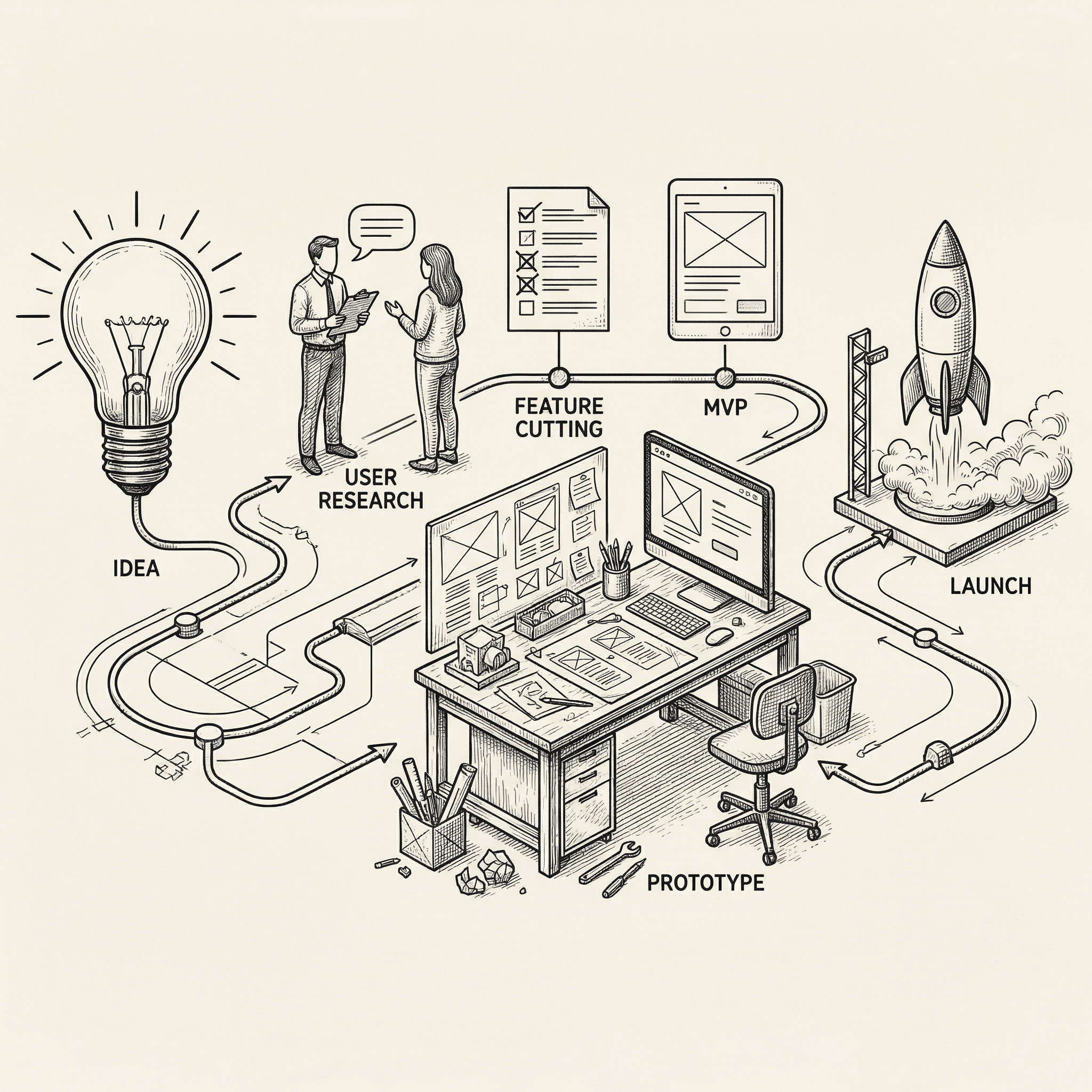
You have an idea. It is exciting. You can see the finished product in your mind — full-featured, beautifully designed, solving a real problem. The temptation is to start building that complete vision immediately.
Do not.
The most common mistake first-time builders make is spending months (or years) building a complete product, only to discover that their assumptions were wrong, the market does not want what they built, or the problem they are solving is not painful enough for people to pay for a solution.
This guide teaches you a different approach — one used by the most successful startups in the world.
An MVP (Minimum Viable Product) is the smallest version of your product that delivers value to real users and lets you learn whether your idea works. The emphasis is on "minimum" and "viable":
An MVP is not a prototype, a mockup, or a demo. It is a real product that real people can use — just a very focused one.
The purpose of an MVP is not to impress anyone. The purpose is to learn. Specifically, to learn whether people actually want what you are building, and what you need to change to make it valuable.
Before writing a single line of code, validate your idea. This does not mean asking friends and family if they think it is a good idea (they will always say yes). It means finding evidence that real people have a real problem worth solving.
Write down the problem you are solving in one sentence. Be specific.
Weak: "People need better project management" Strong: "Freelance designers lose an average of 5 hours per week tracking deliverables across email, Slack, and spreadsheets"
The more specific your problem definition, the easier it is to validate and the clearer your MVP becomes.
Define exactly who has this problem. Not "everyone" — the most specific group you can identify.
Weak: "Businesses" Strong: "Solo freelance designers earning $50K-$150K per year, managing 5-10 concurrent client projects"
A narrow target audience is not a limitation — it is a strength. You can serve ten people perfectly instead of serving ten thousand people poorly.
Look for evidence that this problem is real, painful, and underserved:
If the problem exists and others are solving it, why would someone choose your product? Your unique angle might be:
You do not need to be revolutionary. Being significantly better for a specific group of people is enough.
List every feature you can imagine for your product. Now ruthlessly cut.
For each feature, ask: "Can someone get value from the product without this?" If yes, cut it from the MVP. You can always add it later.
Here is an example for a freelance project management tool:
| Feature | Essential for MVP? | Reasoning |
|---|---|---|
| Create and list projects | Yes | Core value proposition |
| Add tasks to projects | Yes | Core value proposition |
| Due dates on tasks | Yes | Solves the deadline tracking problem |
| User authentication | Yes | Each user needs their own data |
| Client collaboration portal | No | Nice to have, not essential for v1 |
| Time tracking | No | Separate problem, can add later |
| Invoice generation | No | Separate problem, can add later |
| Mobile app | No | Web app is sufficient for v1 |
| Integrations (Slack, email) | No | Adds complexity, can add later |
| Custom themes | No | Does not solve the core problem |
From a list of ten features, you might keep three or four for your MVP. That is correct.
You should be able to describe your MVP in one sentence:
"A web app where freelance designers can create projects, add tasks with due dates, and see everything they need to do today in one dashboard."
If your sentence needs "and" more than once or twice, your MVP might be too broad.
Could you build a functional version of your MVP in one week? If not, you are probably trying to include too much. The goal is speed — get something real in front of real users as quickly as possible.
This does not mean one week from zero. With this template, authentication, database, payments, and deployment are already handled. Your one week is spent building the specific features that make your product unique.
Build the feature that delivers the core value first. For our freelance project management example, that is:
That is it. No settings page. No profile customization. No collaboration. Just the core loop that delivers value.
Every setting is a decision you are asking the user to make. For your MVP, make those decisions for them using sensible defaults.
Instead of letting users choose between list view, board view, and calendar view — just build list view. Instead of offering a dozen notification preferences — send the important ones and skip the rest.
You can add customization later, informed by what users actually ask for.
Build your MVP in a way that helps you learn:
Your first users will not come from a viral marketing campaign. They will come from targeted, personal outreach:
Aim for ten to twenty committed users for your MVP launch. That is enough to learn from without being overwhelming to support.
Your MVP launch will probably feel anticlimactic. Most people you tell will not sign up. Most who sign up will not use it regularly. The few who do will find bugs and missing features.
This is normal. This is the point. You are not launching to celebrate — you are launching to learn.
After launching your MVP:
The most common mistake. If your MVP takes more than two to four weeks to build, you are probably building too much. Cut more features. Simplify further.
Do not spend weeks perfecting your product before showing it to anyone. Get it in front of users as early as possible, even if it is rough around the edges.
If users consistently ask for something different from what you planned, listen. Your vision may need to evolve. The market does not care about your original plan.
Do not worry about handling millions of users before you have ten. Do not build for scale before you have product-market fit. Infrastructure that handles ten users will handle a hundred. Cross the scaling bridge when you reach it.
Your MVP will not compare favorably to products that have been developed by large teams over many years. That is expected. Your advantage is focus, speed, and the ability to serve a specific niche perfectly.
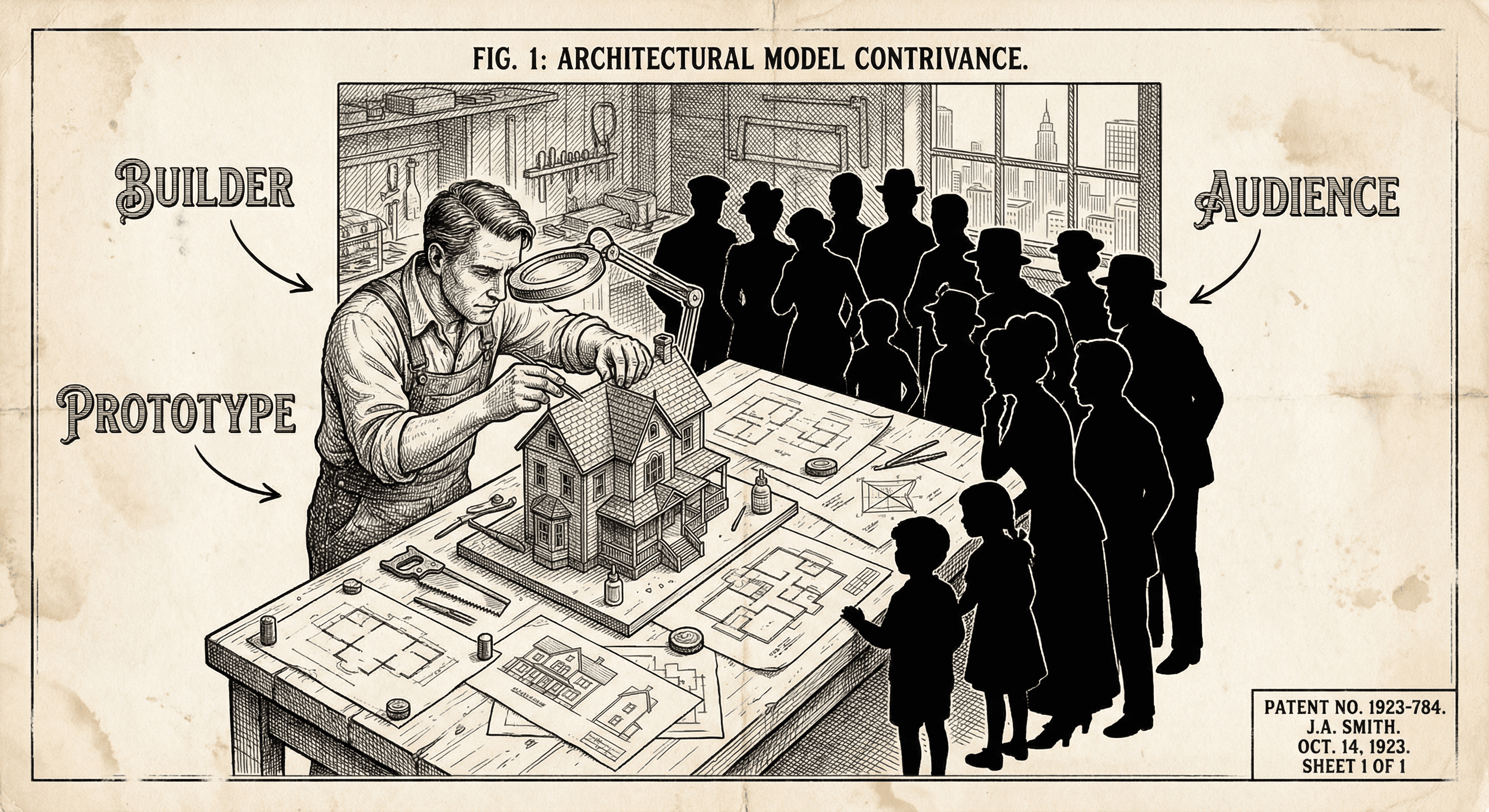
The best products often start with a builder solving their own problem. When you build for yourself, you have a built-in user, clear criteria for success, and a story others can feel.
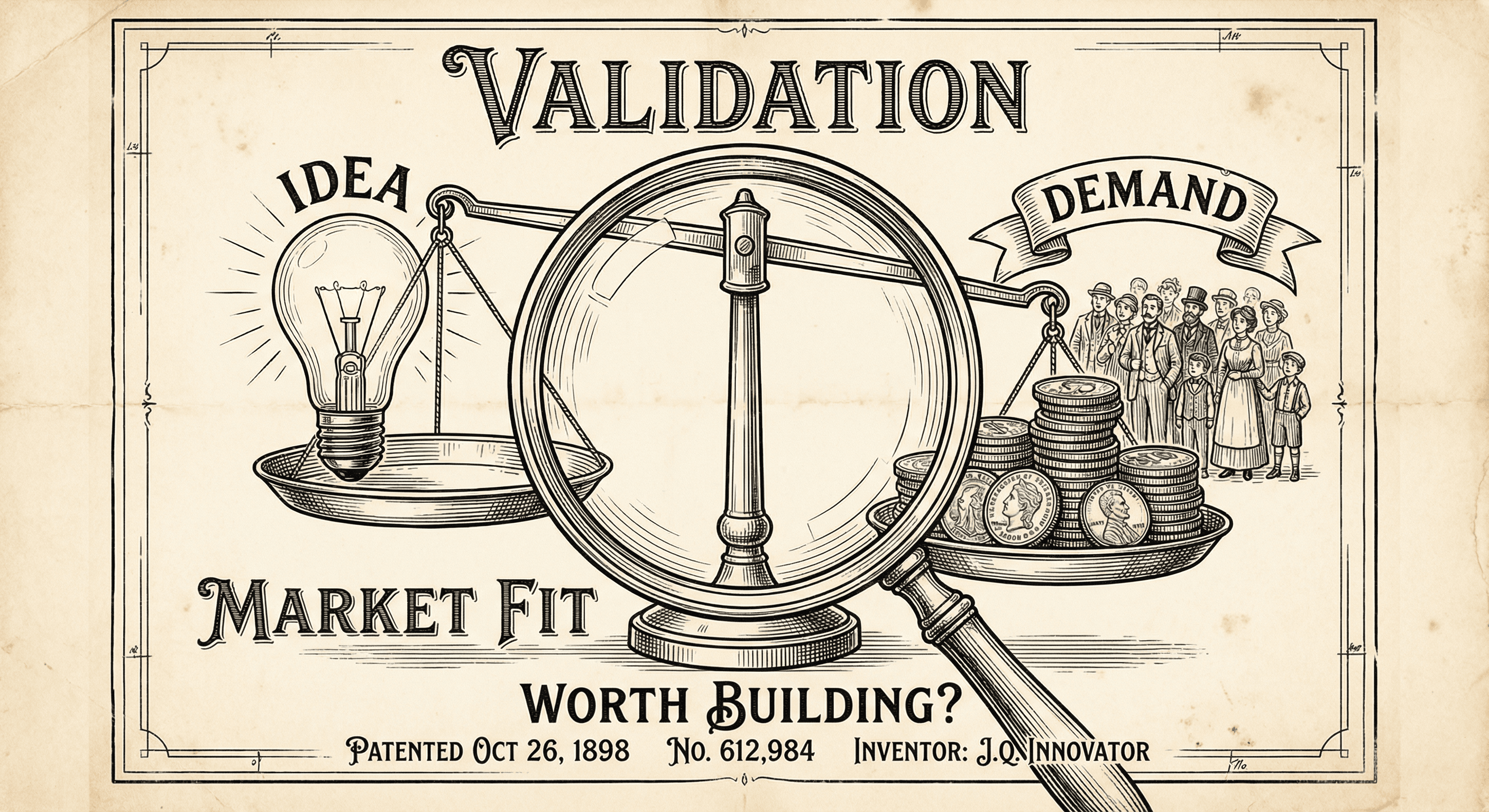
Before you spend months building, check whether real people have the problem and would use a solution. Simple ways to validate your idea without writing much code.
